
SEPTEMBER 2024: LIMINAL TIME
Holland, apples, butts.

Purple plumed reeds bend under Lilian’s force, cavalier crickets chirp amongst wildflower stems, frothing waves lash the basalt dyke. I am lying in its shelter looking up at sky arcing blue and unbroken. A curious Friesian stares with watchful eyes, then scratches her rump on a metal gate with a clang. Sounds of my home:
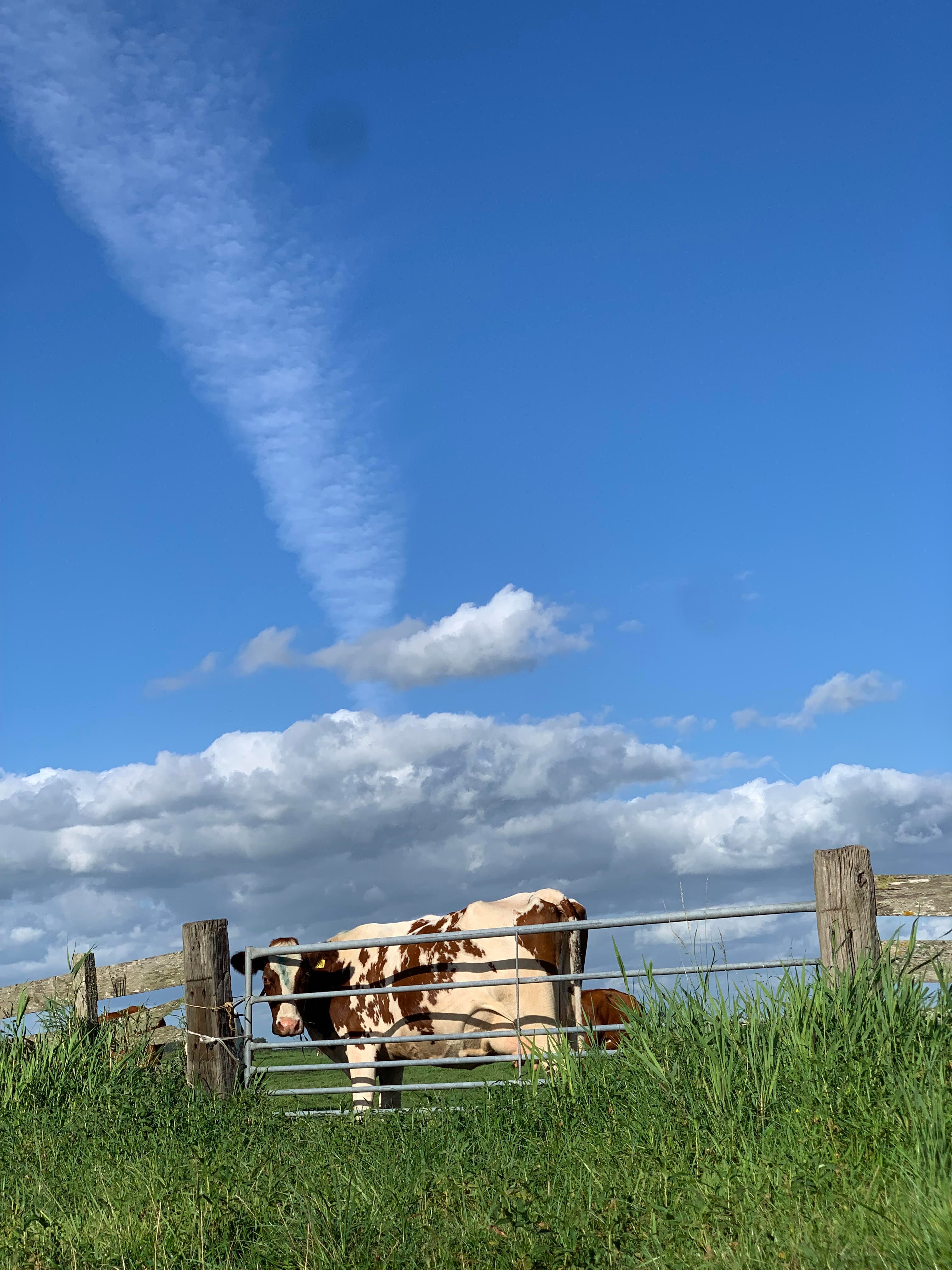
De Woude is a 17th century Dutch polder, south of Alkmaar, severed from the rest of Noord Holland’s reclaimed land by the Markervaart, a canal built in the 19th century by industrious men. I have come on a hired bike, crossing the vaart by ferry, to hide from a noisy world. To hike the circumference of De Woude shouldn’t take long, it is some 7 kilometers, but the grass, dense with thistles, Yarrow, Hemp Agrimony, Wild Thyme and Common Reed, is knee high and the wind is strong. The view stretching across the glittering slate grey waters of the Alkmaardermeer reminds me of landscapes painted by 17th century Dutch masters: this is what the world must have looked like to dairy farmers and their folk centuries ago. I disturb a Great Cormorant who takes off across the lake. I also alert a hare who zooms across a green field zigzagging past sheep’s legs and cows’ gazes. The summer afternoon glides lazily into evening. August in Holland is so beautiful.


Two weeks later, back in Walthamstow, summer glides into something less defined, restless, new, yet old. Shorter light, longer evenings, afternoon warmth, chills at night, September is a gateway.
”Liminal space…It's that period of uncertainty, ambiguity, restlessness, fear, discomfort, and anguish. It's the space between, when a trapeze artist lets go of one bar and doesn't yet know whether they will be able to catch the other bar.”
- Heather Plett in The Art of Holding Space.
The transition to an end-of-year season, smelling of decay with fruit rotting on the ground, pulls at our hearts. I am embracing the tug with time in the kitchen: together with a DJ buddy we’re making apple chutney using Riverford’s recipe. For breakfast I stew apples newly fallen, with cinnamon, porridge oats and chia seeds. It is a different, warming palette. Cold salads don’t taste right anymore.
If your head and heart need an extra season-changing cuddle, this mediation by Jennifer Piercy on InsightTimer is an expansive space that will hold you gently.
Meanwhile in this September newsletter there is… news! And lots of it, plus a wild book tip, the gentle to-do-or-not-to-do list, this month’s soft Music To Garden By playlist and an expert article for paying subscribers about butts for rain water harvesting, how to make them or where to buy them. By taking out a month’s or a year’s subscription you can access all organic how-to articles for your own use at home, while supporting my work, which really helps during quieter winter months.
PHOTOGRAPHY
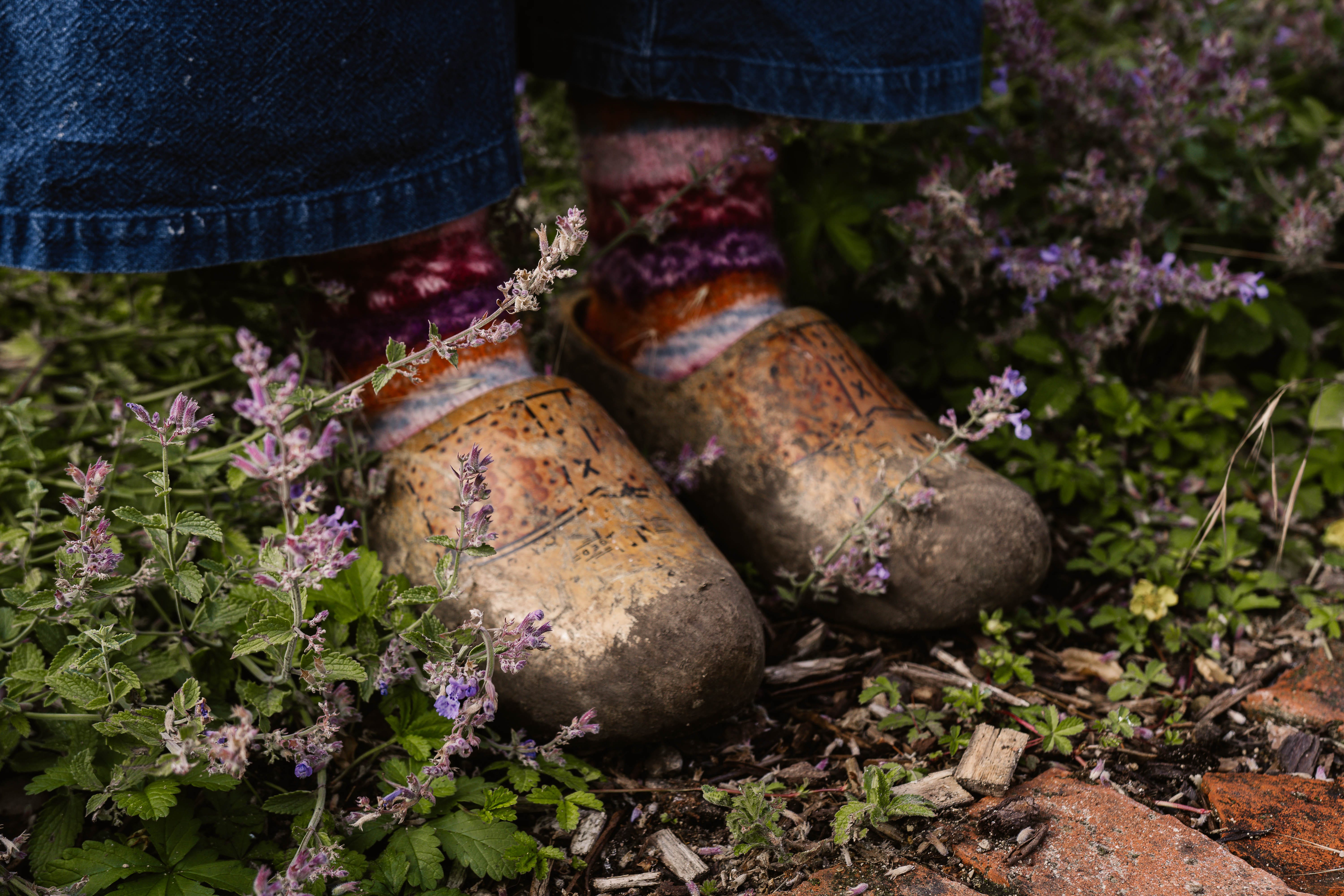
This summer I worked with photographer Ella Brolly on creating professional gardening business photos. Landworker, photographer and writer, Ella also works as Lead Grower at food growing hub Wolves Lane Centre in Haringey.
I choose to work with Ella because I have been an ardent follower of their photographic and growing work since our paths crossed while training at food growing collective OrganicLea. Ella's perspectives, on organic growing, on land-working women, but also on food sovereignty, social justice and land rights, are aligned with STUDIO.SCHIPPER’s land-based activities and views. This meant that we were able to collaborate on creating visual imagery centring and celebrating nature, with humans as custodians. Below is a flash of what Ella created for me. The portfolio is everything and I am excited to share more photos in times to come.
PLOT E17 COMMUNITY ORCHARD
Our growing project, Plot E17 Community Orchard, has been awarded LBWF Community Ward Funding for building accessible raised plant beds and compost bays in October. We will run skills-based workshops for preparing land, mapping out beds and bays, building frames using recycled scaffold board and pallets, adding growing medium and planting winter hardy Aquadulce broad beans.
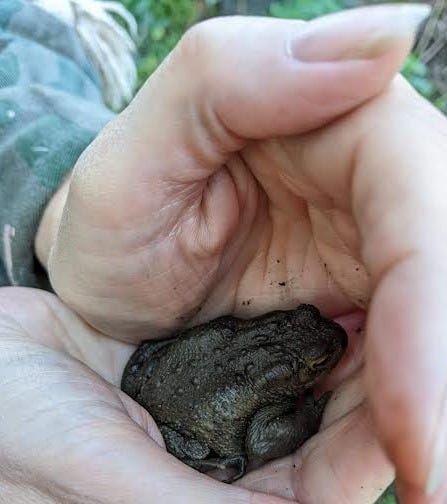
As we have found frogs, toads and newts on our allotment we first need to create alternative habitat in September, before disturbing ground for the October build.
You can sign up to either volunteer with building ponds and winter frog homes, or register for the free allotment groundworks and carpentry workshops. Or do both? To read a full description of activities, dates, times & registration info CLICK HERE.
- Amphibian Habitat Building 21.09, 05.10 & 06.10 / 10am - 4pm REGISTER HERE
- Raised Bed Building 19.10, 20.10, 26.10 & 27.10 / 10am - 4pm REGISTER HERE
NEWS TITBITS
If this season has you wanting to go back to school, check out the Hedge Herbs x Community Apocathery course run by Rasheeqa Ahmed called Radical Herbal Histories and Futures. Over 3 weeks it explores radical herbalism, the roots and branches of structural inequality in our healthcare systems, and routes to community-nurtured healing with participatory learning, knowledge sharing, mutual inspiration + some medicine making. It starts Friday 04.10 and runs for 3 weeks (11.30am-2pm). You can register HERE.
The Walthamstow Tool Library turns 4 on 07.09. Celebrations include apple pressing (bring your own!), bee hotel making (with a real drill!), potato printing (with a real spud!) and tool sharpening (please book in advance via tools@frpuk.org). ONLY on the birthday day will you get a 7% discount on new as well as renewing memberships. Hip hip hooray!
OrganicLea hosts the last Open Day for this year on Sunday 22.09 at their Hawkwood Nursery. You can visit the site between 12pm to 4pm. There will be plants, compost, food, and produce for sale, a chilli workshop, more apple pressing and a grounds tour. Visit their website HERE.
It’s Fairtrade Fortnight from 09.09 to 22.09. When you choose Fairtrade products, you contribute to a fairer, more sustainable future for food production. You support 2 million farmers across 58 countries receiving a fairer price for what they grow while helping to rebalance power in supply chains. With every Fairtrade purchase you have power to #BeTheChange.
BOOK
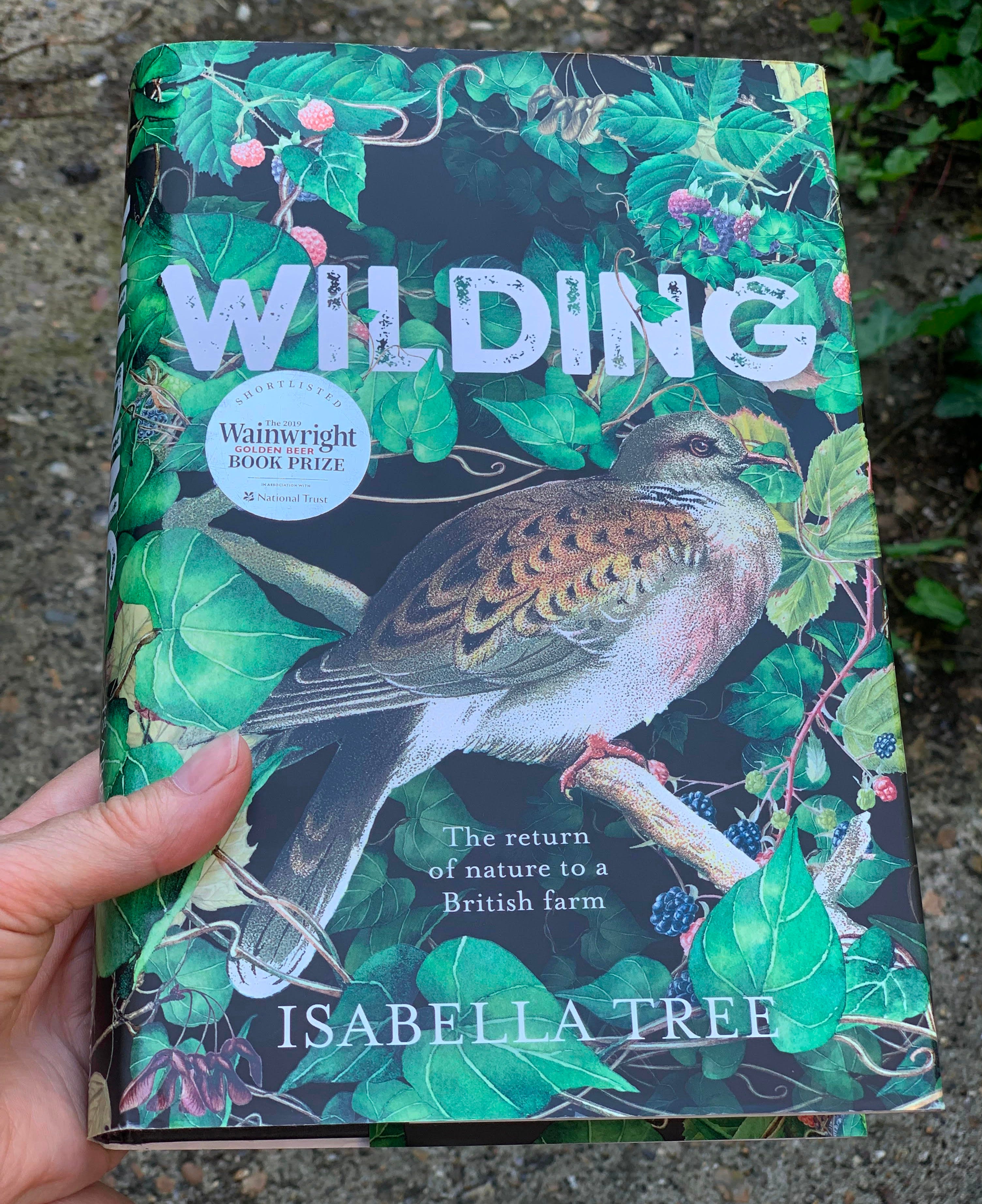
While traveling to and from the Netherlands I devoured Wilding by Isabella Tree, a book about how a degraded farm returned to nature.
Isabella Tree and her husband Charlie Burrell are well-bred farmers who’s families have long owned the historic English estate, Knepp Farm, in Sussex, However, by 1999 the farm was financially on its knees so they decided to withdraw from extractive and destructive practices and hand the land back to nature to allow it time and space to recover. Now Knepp Farm counts big grazing fauna such as longhorn cattle, wild ponies and deer, smaller inhabitants like otters, storks, turtle doves and nightingales and mini fauna in the shape of purple emperor butterflies amongst its treasures. Where species in other parts of the British Isles are collapsing, here they thrive. Isabella Tree challenges common misconceptions about conservation science with hard, proven fact and in doing so, reveals that what humans need to do is not control nature but let nature return to itself. Now, some twenty years later, the Burrells' degraded agricultural land has become a functioning, flourishing ecosystem again.
While I learned plenty from reading Isabella’s book, since it is well researched, I am going to sit on the fence about upper-class land ownership for now.
MUSIC
Enjoy the September songs with your face turned towards the afternoon sun:
TO-DO-OR-NOT-TO-DO LIST
- please leave all your fruit trees alone in terms of pruning, especially stone fruit such as cherries, plums, gages, apricots, nectarines and almonds. Stone fruits should only be pruned in the spring or summer, during dry weather, to reduce the risk of infection from silverleaf (fungal disease) or bacterial canker.
- now is the time for sowing hardy annual flowers such as love-in-a-mist, calendula, poppies and cornflower in situ (= on the ground, where you want them to grow and flower). Since they have naturally set seed to disperse on the soil, you’re copying exactly what happens in nature. Scatter seeds by hand over prepared soil or use shallow drills. Sow seeds thinly, then cover with a thin layer of soil or sand.
- have you ordered your organic bulbs yet? Deliveries will be in October. You can read August’s ‘how-to-do-bulbs’ guide, with organic supplier links, if you subscribe. Or book STUDIO.SCHIPPER to do the shopping and planting for you!
- trim your hedges. Nesting season is over so you can safely tidy up without the risk of disturbing baby birds.
- cut away any leaves covering the fruits of pumpkins, squash and marrows to help the skins ripen in the sun while letting air circulate.
- pick apples or pears. Apples are ripe when you lift them in your hand and the stem snaps gently off the tree. Pears can be picked hard as they ripen over the weeks on a windowsill. Any windfall fruit, what has dropped off the ground, can be stewed if not too bruised. If you are preserving the fruit needs to be unblemished so it doesn’t go off later. Fallen fruit is food for the rest of your garden or allotment eco system so if you need to clear these, for example to protect a lawn, please don’t chuck them in the brown bin. Gather the fruit up and place it somewhere out of sight. It is all organic anyway.
- If you’re considering scrumping, be aware that whilst it is not illegal to pick fruit from common land, or council-owned land where they are not growing fruit for the purposes of food, it is illegal to profit commercially from what you make with the harvested fruit. If you're harvesting from trees and hedges on private land (e.g, from an overhanging tree or bush located in your next door neighbour's house), be sure to ask for their permission beforehand.
If it is all too much, or too lonely, STUDIO.SCHIPPER offers consultations, garden and allotment coaching as well as co-gardening if you’d like a green buddy. To book these supportive gardening services please email studio.schipper@gmail.com.
HOW-TO DO WATER BUTTS